
art
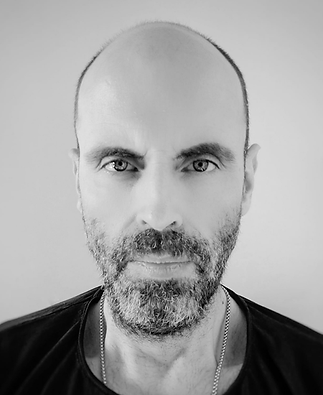
Alper Yahya
Alper Yahya (b. 1978, Trabzon) is an Istanbul-based painter and multidisciplinary artist working across illustration, painting, video, and public surfaces. After graduating from Süleyman Demirel University, Faculty of Fine Arts (Graphic Design) in 2004, he worked extensively as an illustrator in publishing, animation, education, digital media, and advertising, while also taking on roles as an art director, designer, photographer, and educator.
Alongside his professional practice, Yahya developed a parallel artistic language through murals, political illustration, independent filmmaking, and poster design. Since the 2010s, this layered experience has evolved into an interdisciplinary body of work focusing on social contradictions, collective memory, and the narrative potential of surfaces—from walls and canvases to screens and the human body. He describes his practice as that of a “line worker,” emphasizing continuity and labor in image-making.
In recent years, his work has expanded into video, photography, tattoo, and site-responsive interventions, exploring the memory embedded in both urban space and the body. His poster designs for Istanbul City Theatres further reflect his interest in the intersection of disciplines.
Yahya held his first solo exhibition in Istanbul in 2025, followed by a second in 2026, both centered on testimony and collective memory. His works have also been presented at contemporary art fairs in Ankara. In 2026, he participated as a speaker at ArtAnkara Contemporary Art Fair in the panel “Rising Criticism of Contemporary Art.”
He continues to live and work in Istanbul.
Artist Statement
Alper Yahya's artistic practice proposes a position that extends beyond purely aesthetic concerns. Adopting a figurative, direct, and politically engaged visual language, the artist prefers to reveal rather than narrate, and to suggest rather than symbolize. At the core of his practice lies not the creation of abstract imagery, but the act of bearing witness to lived reality.
The linear language that defines his work draws upon an ancient visual memory stretching from prehistoric cave paintings to the public walls of Ancient Rome. Through the powerful contrast of black and white, Yahya reinterprets this historical visual tradition within a contemporary context. His restrained formal vocabulary and technical choices deliberately maintain a critical distance from the spectacle and ornamentation often associated with dominant elite aesthetic values.


